Happy Easter to you!
I was inspired by this lovely photo and rushed to dye some eggs in a crunchy way before the Easter bunny arrived. Aren’t these colors divine?
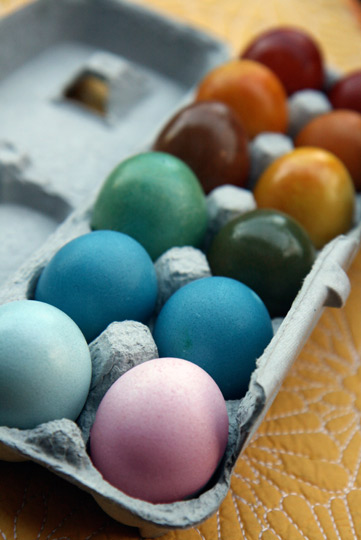
So I followed these directions…
How To Make Vegetable-Dyed Eggs
Keep in mind the effect of the dyes varies depending on how concentrated the dye is, what color egg you use, and how long the eggs are immersed in the dye. I used half a purple cabbage, shredded, to dye four eggs. Err on the side of more rather than less when creating your dye.
Hard boiled eggs at room temperature, or white and brown eggs, preferably not super-fresh
Purple cabbage (makes blue on white eggs, green on brown eggs)
Red onion skins (makes lavender or red)
Yellow onion skins (makes orange on white eggs, rusty red on brown eggs)
Ground turmeric (makes yellow)
Red Zinger tea bags (makes lavender)
Beets (makes pink on white eggs, maroon on brown eggs)
Oil (canola or olive)
White vinegar
Clean the eggs so there are no particles sticking to their shells.
To prepare a colored dye, first chop the cabbage, chip or peel away the dry skins from the onions, or shred the beets. In a stainless steel saucepan, boil enough water to generously cover the number of eggs you’ll be dyeing. Add the dye matter and bring to a boil, turn heat down to low and simmer, covered, for 15-30 minutes. Dye is ready when it reaches a hue a few shades darker than you want for your egg. Examine a sample in a white dish. Remove from heat and let cool to room temperature (I put the pot on my fire escape and it cooled off in about 20 minutes).
Pour mixture through a fine-mesh strainer into another stainless saucepan, or into a bowl then back into the original pan if that’s all you have. Stir in the vinegar. For the dyeing, it’s best to use a pan with a flat bottom, like a Dutch oven. Arrange the room-temperature eggs in the pan in one layer and carefully pour the cooled dye over them.
Place in refrigerator until desired color is reached. Massage in a little oil to each, then polish with a paper towel. Keep in refrigerator until time to eat (or hide.)
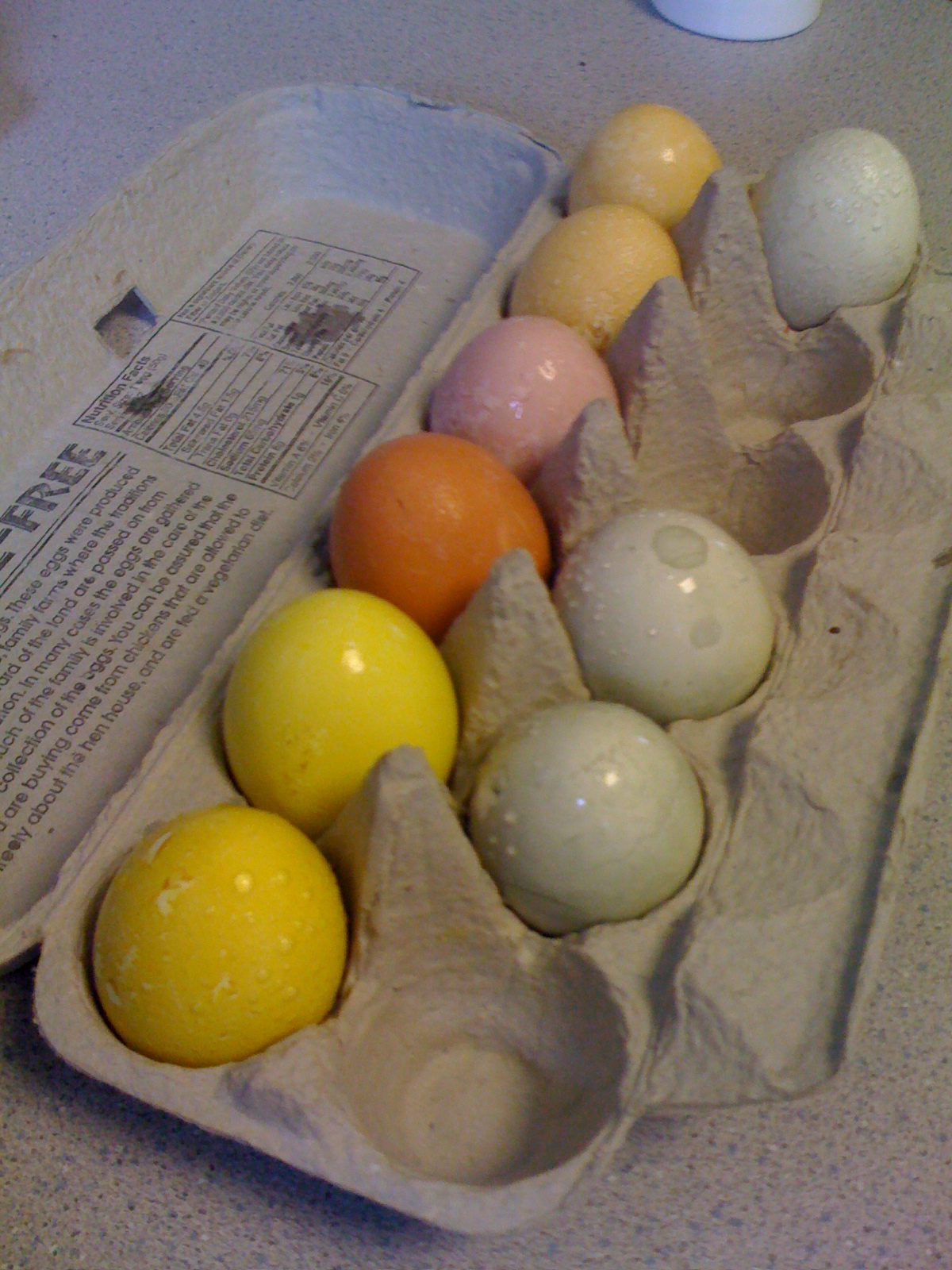
And of course I tweaked these directions and used what natural things I had around – some green tea, some other fruity herbal tea, a bit of raspberry juice and some turmeric. Looks pretty good so far, right?
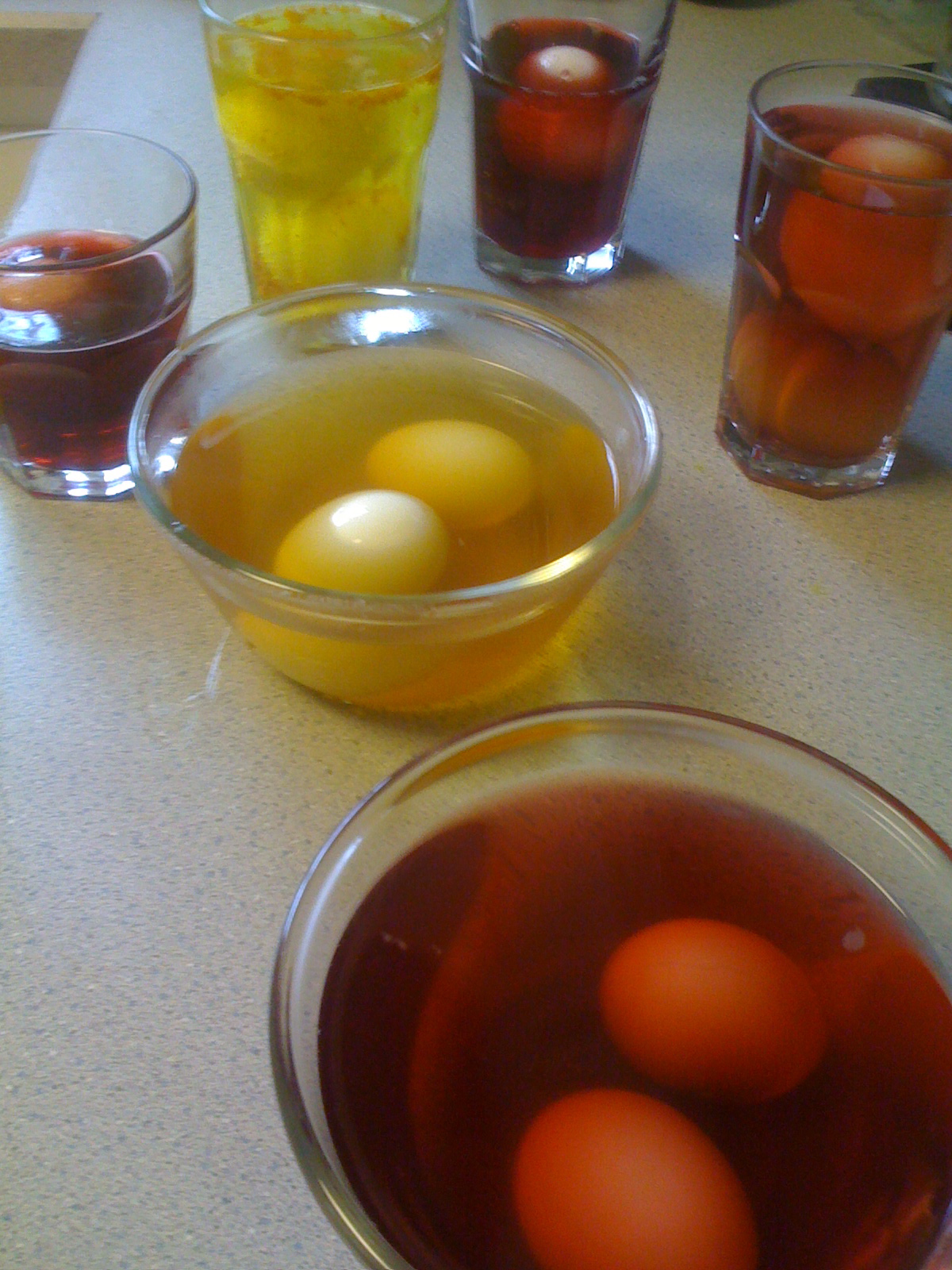
Well, here they are. I’m a bit disappointed because they don’t quite look like the inspirational photo, but they’re growing on me. It’s just that I’m not really a pastel kind of a girl. Sigh. There’s always Photoshop!
So for a bit of fun after a bit of disappointment, I decided to start a new Easter tradition. I had the ingredients already, but I just hadn’t quite gotten around to making them. But I needed a good chuckle and I guess I needed a few chemicals too after the crunchy egg dyeing experiment sooooo..

Voila! An orange squirrel on a stick! How’s that for a new Easter tradition?

So here’s the bribe you’ve been waiting for, dear readers. Nothing like a bribe on Easter, eh? The first six people to comment on this post AND let me know what topics you’d like me to explore in future blog posts… that’s right, you guessed it! I’ll send you an orange squirrel on a stick. Note: you WILL be chastised if you ask me what the ingredients are. This is an orange squirrel on a stick; this is not a health food.
Have a wonderful Easter or fun pagan ritual, whatever you choose. Enjoy!


 magazine. (Don’t you love that publication? I always get something out of it.)